How an Egg Is Made
From yolk to shell, a hen forms each egg in about 24–26 hours as it travels through her oviduct.
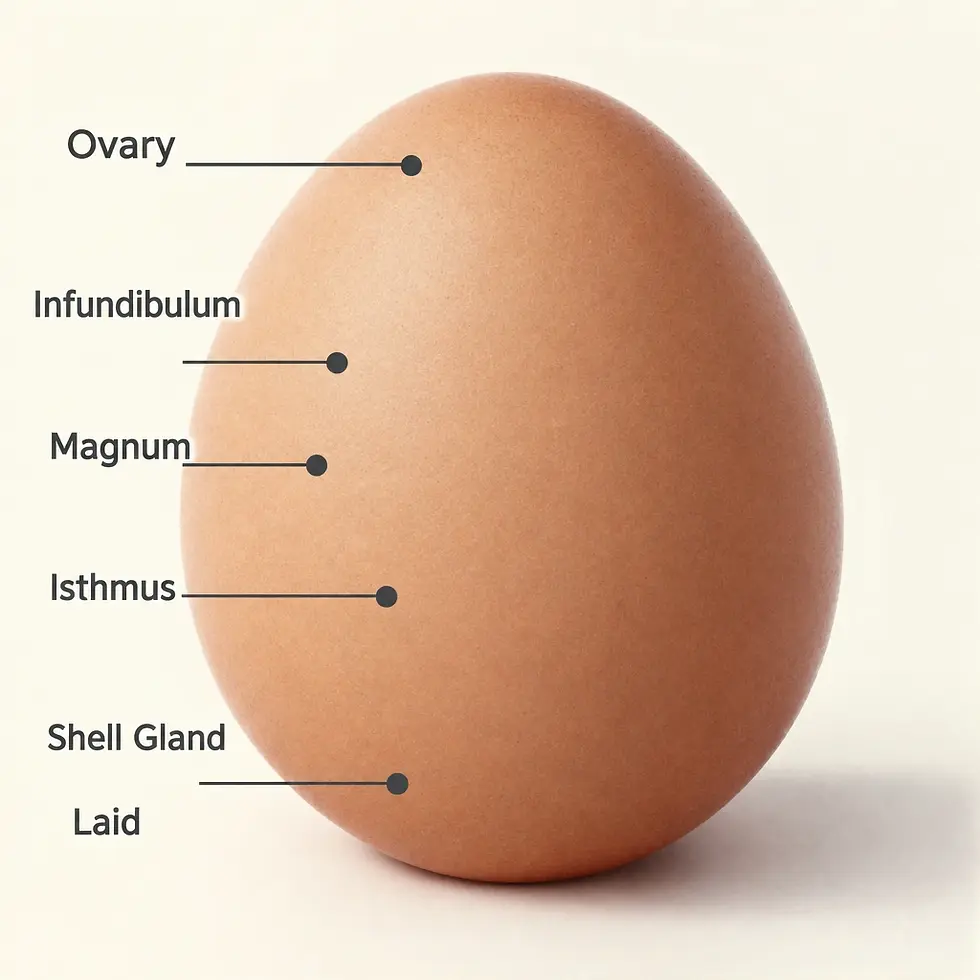
1. Ovary
The yolk develops and is released. (~15 min to enter the oviduct)
2. Infundibulum
Catches the yolk; fertilization can occur here. (~15–30 min)
3. Magnum
The egg white (albumen) is added. (~3 hours)
4. Isthmus
Inner and outer shell membranes form. (~1.25 hours)
5. Shell Gland
The calcium shell and color are deposited. (~20 hours)
6. Laid
A protective bloom coats the shell as the egg is laid.
The Egg, Inside and Out
Outside
- Bloom (cuticle): natural coating that seals out bacteria
- Shell: mostly calcium carbonate, strong yet porous
- Pores: thousands of tiny holes that let air and moisture pass
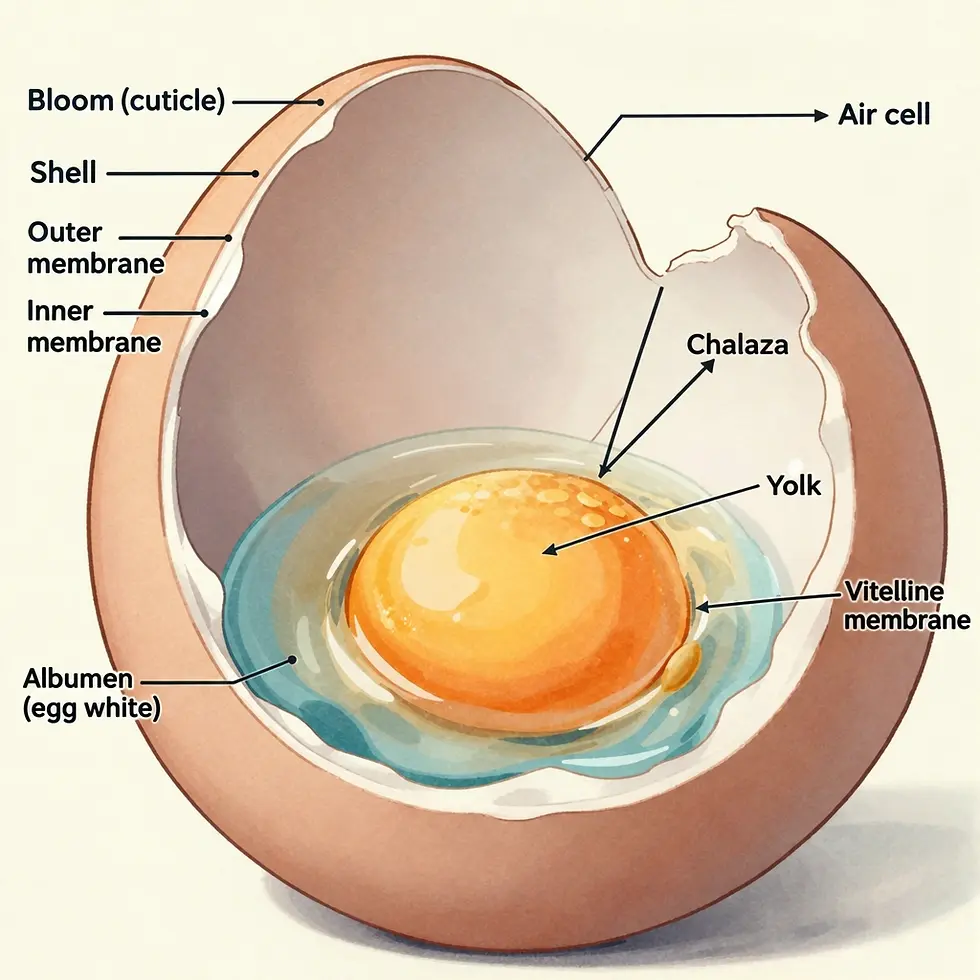
Inside
- Shell membranes: inner and outer layers that guard against bacteria
- Air cell: pocket at the wide end that grows as the egg ages
- Albumen: thick and thin egg white
- Chalazae: twisted cords that center the yolk
- Yolk & germinal disc: the nutrient-rich core
Taste the Difference—Fresh From Our Farmstand
Every step you just read happens on our farm, every day. Pick up a dozen of our pasture-raised eggs while they’re still days fresh—quantities are limited, so grab yours today.
From Our Pasture
What Makes an Egg Pasture-Raised?
Pasture-raised hens spend their days outdoors on open grass, foraging for seeds, insects and greens the way nature intended. With room to roam, sunshine and fresh air, they live active, natural lives — and it shows in every egg.

Room to Roam
Hens live outdoors with space to scratch, dust-bathe and forage — natural behaviors that support happy, healthy birds.
Rich, Golden Yolks
A varied diet of grasses and bugs gives pasture-raised eggs their deep color and full, fresh flavor.
Better for the Land
Rotating hens across pasture naturally fertilizes the soil and keeps the land healthy season after season.